about november
dispatch 30

hi friends,
How are you doing out there? Let me tell you that I really thought COVID was the final doozy of 2022, only to have our home robbed (with us in it) about a week after we recovered. As of this writing I haven’t even processed this in my own brain yet so I won’t say much about it here, except to say that I hope that what they took met their needs and at the same time, I’m feeling a lot of resentment for being made to feel unsafe in my home. There’s a lot there.
This week’s essay was written before all of this and is on the shifting season and turn towards winter here in the Northeastern US.
If you’d like to sign up to support my work and receive an additional monthly dispatch (with one coming up next week!) you can at the button below. If you’d like to receive the additional dispatch but signing up isn’t financially feasible, reply to this email and I’ll get them your way.
about november
On its face, November is a hard month to love. (I believe that this is why the universe has surrounded me with Scorpios, to make up for itself.) November’s appearance means that the season is changing yet again. When I go for a run, my shoes slip against the piles of fallen leaves, discolored and sweet smelling in the beginnings of their rot. All of that shocking color that keeps us floored from September through October has congealed and started to brown at our feet. At the more responsible houses of which ours is not one, they’ve been systematically collected into tidy rows of brown paper bags to be taken away for compost.
I inhale deeply and feel my lungs hitch a beat as they remember how to let the cold in. The sky has settled into a permanent gray and everyday before 5pm the sun has disappeared so that by the time I’ve gone to bed I feel like it must be hours and hours later than what it is. Every year people get upset about Daylight Savings Time, but I like that nature is the only thing that can still bend us to her will.
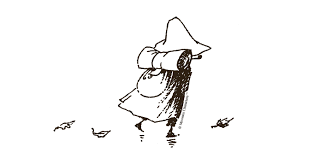
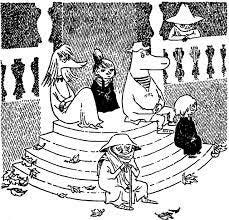
Last month I read the children’s book Moominvalley in November and as I won’t stop mentioning in this newsletter, I am endlessly inspired by Tove Jansson’s work and the ways that she used seasonality as a backdrop for learning. Moominvalley in November finds a cast of misfit side characters heading to Moominvalley, the idyllic setting and home of the Moomintroll family that made Tove famous. Each character is settled in a painful emotion: loneliness, exclusion, judgment, fear. They long for the care and warmth of this family and this home which they remember in the perpetual heat of a carefree summer. When they arrive, they find that the family is gone and they are instead stuck with each other. The valley is cold and bleak, at a moment of turn towards winter and they are disappointed and unsure of what to do. They thought their problems would be solved but instead they are only magnified.
This strange cast of characters, in a kind of desperate act of waiting, wind up living together in the empty Moomin house where they bristle and prickle against each other, holding up mirrors to each other’s insecurities and ways of being. They are a reluctant and unlikely community, and they must learn how to be together with themselves and with each other without the steadiness of the Moomin family.
The characters of Moominvalley in November start awkwardly but eventually they make space for both themselves and each other in the house. This is not an idyllic coming together but rather a principled compromise that acknowledges the ways that they are different and the same. Because their relationships are continuously challenging, they provide opportunities for each character to better understand themselves as they are, not in their own heads but in reality. They must face the ways their ideas of themselves as generous or helpful or adventurous creatures do not match their actions and they must either change their actions or their ideas to match.
That the absent family is the book’s great catalyst is no surprise. Tove wrote Moominvalley in November as the last of her Moomin books when she had begun to resent the fame that they brought her and the ways it eclipsed so much of her other work. She wrote it as a goodbye and it reads that way. In asking herself what she is without her trolls, she makes readers reflect on what identities, ideas, and practices we hold as central in our lives and who we might be without them. In my own life, I wonder in what ways have I made my sobriety, my queerness, my identity as an artist, my political beliefs, etc stand as placeholders for parts of my personality? In what ways are these puzzle pieces giving me an easy out, allowing me to identify myself without truly thinking about what each label or identity means to me and means about how I show up in the world? What is my Moomin family, the thing that I think will solve everything, and what would I do if it suddenly went missing? Who would I be then?
It’s a strange new vein of curiosity for which November is a perfect partner. It is a liminal space between the seasons that drives us inside in all of the ways that count, reminding us that there are no quick fixes or easy answers. Sometimes you just have to wade through. The thing that I love and hate about these brutal Northeastern Winters is how they make me face myself when I least want to. How this season is a catalyst for my own sense of creativity and resilience when I need to learn new ways to care for myself, to connect, and to thrive amidst bleakness and cold.
Assorted, rad things:
X: Straight Edge and Radical Sobriety edited by Gabriel Kuhn: This is the sequel to a book I mentioned a few weeks back, this one published in 2018. While I don’t and have never identified as straight edge, this book contains the most material by and about sober queers that I have ever come across outside of my partner’s study of Jean Swallow’s work. I didn’t realize how much I needed to read these zines, interviews, articles, and to see this art. Worth a read whether hardcore was your thing or not.
If Books Could Kill podcast: I am a major Michael Hobbes (of Maintenance Phase and You’re Wrong About fame) fan and his new podcast has deep dives of “airport books” to see how bad (ie: not data supported, just false) ideas spread. The Freakonomics episode had me in full critical yikes mode for a full 24 hours remembering baby global econ major Lisa in 2007 absolutely reading this book and taking it at face value. I repent. If you’re an academic burn enthusiast, this is a pod for you.
Telling a Lie, One Black Coffee at a Time by Niko Stratis: I am, quite simply, obsessed with Niko Stratis’ writing. I read her reviews of comic books which I will literally never read just because the writing is SO good. And while there were about a million essays I could share, I keep coming back to this one and wanted to send it out to you all. This essay is not about booze (though Niko is sober) but it feels like it to me anyway in that way that we wrap our personality around a substance and hope no one notices how flimsy it becomes.
I may send out a make up dispatch next week since I missed the first send of this month and writing is feeling joyful again in spite of everything. In the meantime, I’d love to hear what you’d been loving, reading, listening to lately…send some inspiration my way!
until then,
lisa
This newsletter is reader-funded, the small percentage of folks who pay make this whole thing possible. Big thanks to those who support my work in all of the ways. Sharing is encouraged and appreciated. Feel free to send snoozeletter to a friend if you think they’d enjoy my work.