

complex sobriety
dispatch 19

hello friends,
I’m writing this on a morning when I truly slept well for the first time in what feels like weeks. I’m pre-coffee, there’s a cardinal on the birdfeeder outside the window, and life feels good and manageable for the moment. I’m learning to really cherish the moments without worrying that they will end. They always do, and that’s okay.
This week I wrote about where I’m at with my sobriety right now, as it continues to shift form, and evolve. I want to be clear that this is where I am at…I am only speaking about my own sobriety because that is the only experience I am qualified to speak about. We’re all different and there is space for as many iterations of recovery as there are people. I am glad that my thinking on this is still evolving and I hope it will never stop.
If you’d like to sign up to support my work and receive an additional monthly dispatch you can at the button below. If you’d like to receive the additional dispatch but signing up isn’t financially feasible, reply to this email and I’ll get them your way.
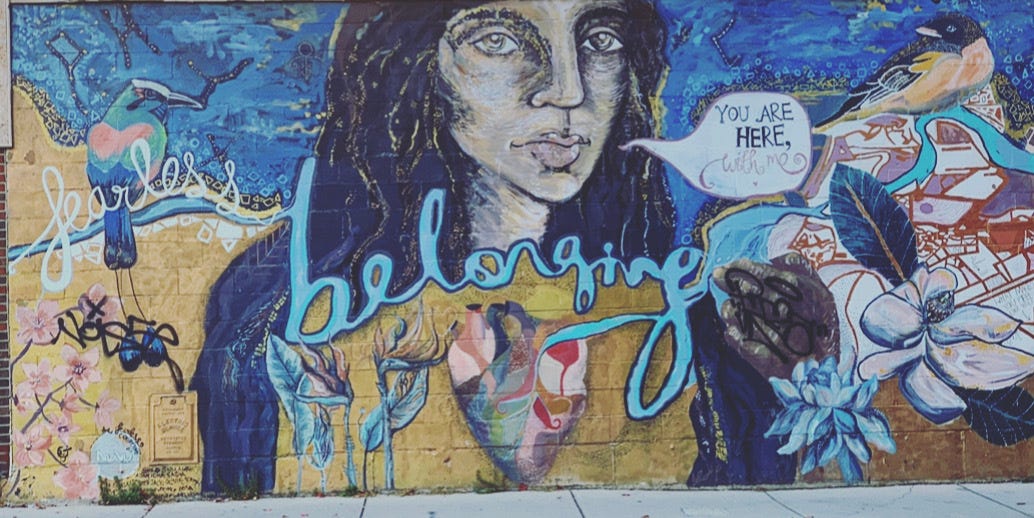
complex sobriety
Right now I am doing the work of recognizing my own agency, my own responsibility, and my own part in things that have shaped my life in critical and untold ways. Things like my addiction, my body struggles, my marriage. I am finding the holes in the stories that I have told myself and being curious about the particular shape they have formed in my brain, based on my experiences of and beyond them.
The lineage of recovery that I came up in was incredibly helpful to me in many ways. I do not know if I would be sober without it and I am deeply grateful that I found it and was able to access it when I did. It intertwined with my burgeoning political self-education and created frameworks for me to examine some of the systems that my life and my addiction came to be within. Still, in asserting my agency in the loudest of voices, even as I declared myself someone who would no longer be victimized by alcohol, there are ways in which I vacated my agency to embrace a narrative that was not true to me. One in which my addiction and the things that caused it absorbed all of the blame.
The truth is, I like having things to blame. And in retrospect, I was often dishonest about where that blame ended and began. I used the truths of systems of oppression, capitalist Big Alcohol, and the like to completely absolve myself of responsibility for how I acted in the years when my drinking was at its worst. I did not need to be humble, I claimed. In fact, I would not be humble. I would not play into the patriarchal myth of feminine humility. I made humility an enemy and something to avoid at all costs, which is no longer something that is working for me.
Alcohol is an addictive substance. It is made that way. That I became addicted to it means that it worked in exactly the way it was intended to. It is true that being addicted to an addicting substance is not a character flaw or some sort of moral breach or malfunction of willpower. Addiction, while not the outcome for everyone based on a number of factors, is the nature of this particular beast. That is the truth.
And it is also true, in my experience, that when I was drinking, I both consciously and unconsciously made choices. I hurt people. Sometimes the booze contributed to this and sometimes it didn’t. Sometimes, I was just a human being who was sober for a day and still didn’t show up as her best self for any number of reasons. I feel a deep love and compassion for that version of myself. I know that most of the time she was trying her best, making the choices she could with the information she had. My addiction does not absolve me of having caused pain, having made mistakes, and sometimes my addiction was actually not to blame at all. I was still human in my messiness through all of it, in the way that I am still human in my messiness now.
I am not seeking absolution or self-punishment for past wrongs. But to live within my own integrity, I do need to be able to examine the path of my life with a critical eye. It is the only way that I can possibly move forward toward the ways I want to show up in the world. I do need to know where I would make different choices now, not to live with regret, but so that I can make aligned choices in the future.
It is a good story to emerge from addiction as a phoenix of epic proportions. To come out swinging at everything that has ever hurt you. I am grateful that this was a part of my experience. That brand of empowerment helped me to completely shift the course of my life. To build a career, to pursue creativity, to leave when I was not happy, to build the truest love and brightest friendships I have ever known. I do not think that humility is incompatible with this. In early recovery, I thought that humility or apology would show my flank, and diminish my strength or resolve. I placed myself within a false binary of victim or not, but my sobriety must be a reclamation and recognition of my agency, or it is of no use to me at all. It can handle complexity. Being able to see my part in the course my life has taken feeds me. I don’t need the opt-out option, my recovery is too strong and beautiful for that.
Assorted, rad things:
Sober Goons podcast: Did you know that my favorite person’s work is now available in the Apple podcast app? I love an oral history so much and this one is a nod to Jean Swallow, and a celebration of queer sobriety and the stories that don’t get told.
Conflict Is Not Abuse: Overstating Harm, Community Responsibility, and the Duty of Repair by Sarah Schulman: Finally got around to reading this book and if anyone else has read it, let’s chat about it! I love that I struggled so much with it! I’d read a chapter and my brain would be noodling over it and arguing long after I was done. I learned a lot, I rethought some opinions I held, and I started to reframe some conflicts I have been holding onto my life.
Never Too Thin by Éva Székely: I picked up this book for $1 in the gay section of our local used book sale because I am literally living my dream life. It is one of the best books on disordered eating I have ever read and it is from 19-freaking-90. It looks at binge, restriction, and dieting behaviors through an anti-capitalist, feminist lens that feels humanistic and realistic. It hardly feels dated over 30 years later and was the first book I’ve read on this topic that felt truly healing. The cover art is delightfully and disturbingly weird which is a plus.
I love comments or email replies more than anything in the whole world….I’d love it if you let me know what you think of today’s essay. Thank you for reading. See you next month!
sending big love,
lisa
This newsletter is reader-funded, the small percentage of folks who pay make this whole thing possible. Big thanks to those who support my work in all of the ways. Sharing is encouraged and appreciated. Feel free to send snoozeletter to a friend if you think they’d enjoy my work.
A fantastic read, thank you. Hadn’t heard of ‘Never Too Thin’ (was alarmed by the title until I read your great description) so I’ll check that out 😊