

mothering
dispatch 82

hi friends.
May got away from me for all of the right reasons. We are freshly back from a train trip across the country for visits with family, and while I spent a whole lot of time scribbling in my travel notebook, I never quite made it onto my laptop to send a dispatch out. As I settle back into regular life, I’m still trying to find my way to a new writing rhythm.
Keep reading for an essay on mothering and finding forgiveness in the soil, followed by some gay culture I’ve been loving lately. Happy pride homos! May we be happy, may we be healthy, may we be safe, may we be an absolute collective menace.
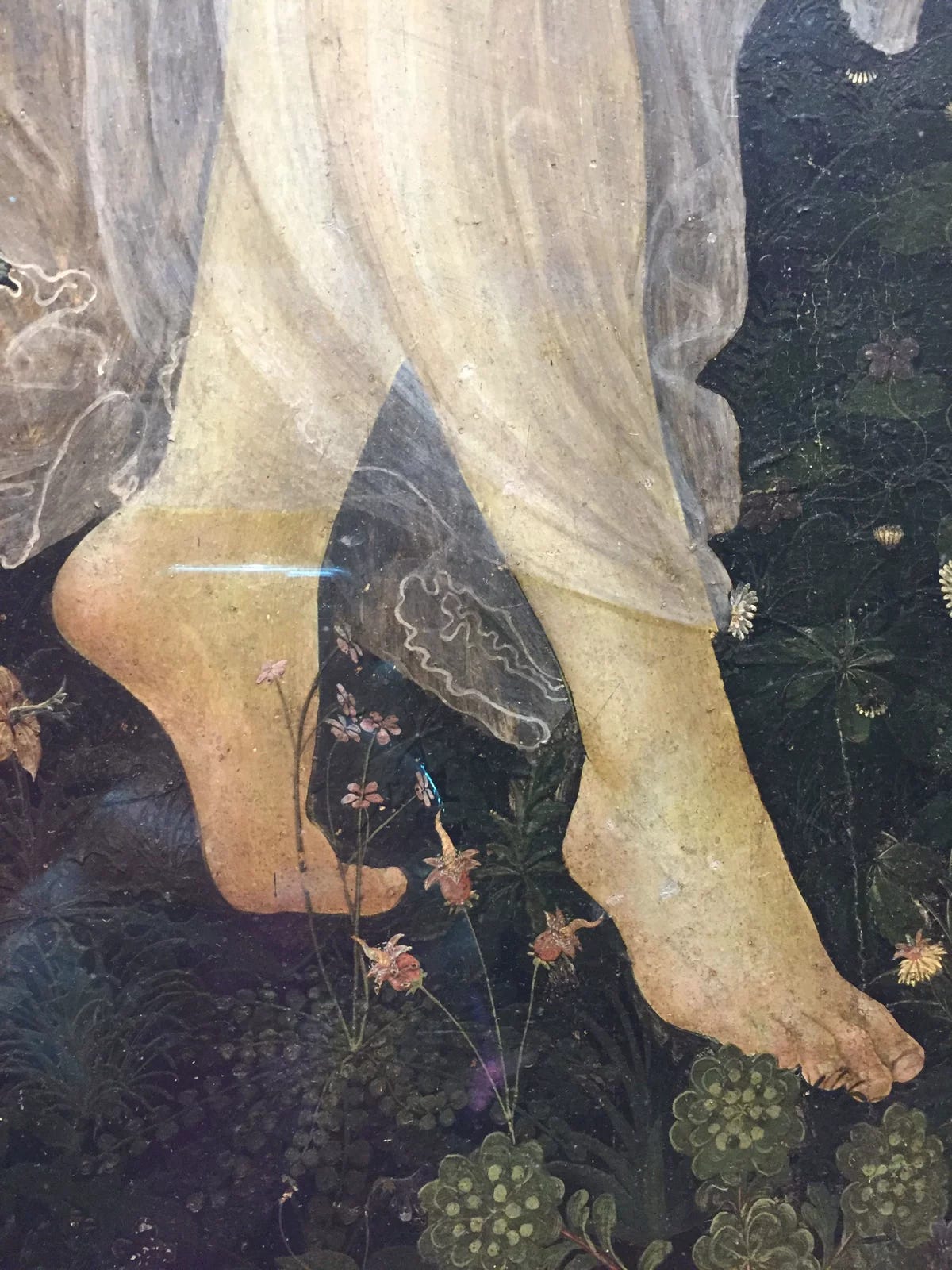
Last month brought Mother’s Day, the third without my mother. I spent it putting plants in the ground, adding flowers to pots on my steps like she used to do. I come to the soil to mother, just as I come to it to be mothered. Over and over again, without fail.
My mother did not always know how to mother. When she did, she mothered with a kind of fierceness that left no room for error. She was a “get on with it” mom, a “suck it up and deal with it” mom. She believed she could fight off sickness with the force of her will. She held grudges against children who wronged me in elementary school long beyond when we all became adults.
But, she could be spectacular in ways that would never wind up in a parenting book. She’d steal me from school once a year to spend the day with me, usually wandering the mall, getting lunch at McDonald’s. When the power went out, she rolled out the blanket, lit the candles, and declared it an 1800s night. She cheated shamelessly at Scrabble. She encouraged me to punch the bully back, molding my hand into the shape of a correct fist with her 90s-issue red-lacquered acrylics. She knew what she was talking about, she always hit first and asked questions later.
But you only confuse protection with love if you have a reason to. That taloned woman was a child once. I think of her saying, at 65 years old, that she could not remember anyone telling her they loved her when she was a child. In that way at least, and I’m sure in many others, she gave so much better than she got. We do our best, don’t we? Even through the moments and years when our best isn’t very good.
I am Lisa, daughter of Gun-Britt, daughter of Elvi, daughter of Kajsa Sofia. Back and back and back through the generations. How were they mothered? I never thought to ask until it was too late. This question picks at me as I put my hands into the dirt. As I watch a small toad who sits watching me from 2 feet away, unfazed by my movements. As I dig and add compost to the hard, difficult clay of the soil. As I create space for new roots, new life, to thrive.
Planting is always an easy-at-hand metaphor for what we are learning to grow, but that doesn’t mean it’s a bad one or a simple one. There is something about tending anything well that requires a kind of deep attention. A fading into the interconnectedness that it is so easy to forget when we are deep in an hour of scrolling, seeking a relief that our phones are not interested in or capable of giving us. A willingness to let a being tell you about itself before you make assumptions.
My mother made a lot of assumptions, but then so did I. I think we both wanted more than we got but were never quite brave enough to say so.
In the soil, in the mother that is the soil, my finger tips can find a new perspective. I can stop being so frustrated with my mother for just a little while. Anger is not easy, but it is so much easier than hurt. I try it on often when I am too tired to carry heavier things. But lately, a realization. I don’t think this is true for everyone, but I do think that in my case, forgiving my mother is the portal to forgiving myself. To becoming something like my mother’s sister. Bend my eye to her level to see the contours of what she had lost. To offer her tending she should have received long ago.
This place is mothering and growing me, in all of the ways that matter. At my most depressed, I have been cradled by star moss, fortified my spine against the trunk of a white pine. I have lay staring at the ground entranced by the complexity of one small patch of lawn, all feathered yarrow leaf and creamy strawberry blossom, the ants traversing it all on their own life’s journey. There is more interconnected, thriving life in a space the size of the palm of my hand than I can even begin to comprehend. And that, I think, is something like god.
I breathe in what the plants have created. I breathe out what nourishes them. We care for each other without ever saying a word. I find, in them, a sturdy set of ancestors to relax into. I find, finally, the wisdom that I seek.
I pull worms from the soil with every scoop, shining bodies shifting in the shock of sunlight. I place them back gently, one by one. I have enough capacity, in this moment, to love them and love them well. The little plantlings too with their clumped roots and hopeful sprouts, I can tuck into bed, as my mother settled me all of those years ago.
And in all of it, I can find a map to understanding. I can forgive the ways that we do what we think is best, what we are capable of in any given moment. I can see them all, this long line of women putting their hands into the soil across time, returning to the soil with time, and tending, tending, tending each other as we are also tended. I can see it all. And I am grateful.
a (gay) patchwork of magic: culture recommendations
Gay things I’ve watched, read, listened to, etc etc etc that brought some power, enchantment, or other big feels into my life. Happy Pride!
Jai m’appelle Agneta: This movie was incredibly wholesome and surpisingly moving. Mid-life Swedish woman moves to France to be an au pair for an elderly eccentric gay man who lives in an abandoned monastery. A truly surprising amount of dildo cameos and very aspirational robe/pajama content. I laughed but I also genuinely sobbed, I can’t stop recommending it to everyone I know.
The Light Eaters by Zoë Schlanger: Did you know that plants can summon predators to eat their predators? That they can communicate via airborne chemical signals? That some plants can mimic other plants or animals to meet their survival needs? I love anything that troubles the reductive “survival of the fittest at any cost” stories we have been fed for so long and this book was so beautiful. Nature is so rad.
H is for Hawk by Helen MacDonald: I wanted to include this book in this all-queer round up but wasn’t sure if Helen was queer. Then, I remembered context clues: They have a whole-ass hawk! Helen is family! That’s gay math, folks (I googled to confirm. Show your work.)! A memoir of parent loss, wildness, and more-than-human relationships, I couldn’t put this down. Bonus points for the A Sword in the Stone lore.
Thank you for being here. Here’s your gentle reminder to pause and do something sweet for yourself before you jump to the next thing.
Until next time,
Lisa